 by
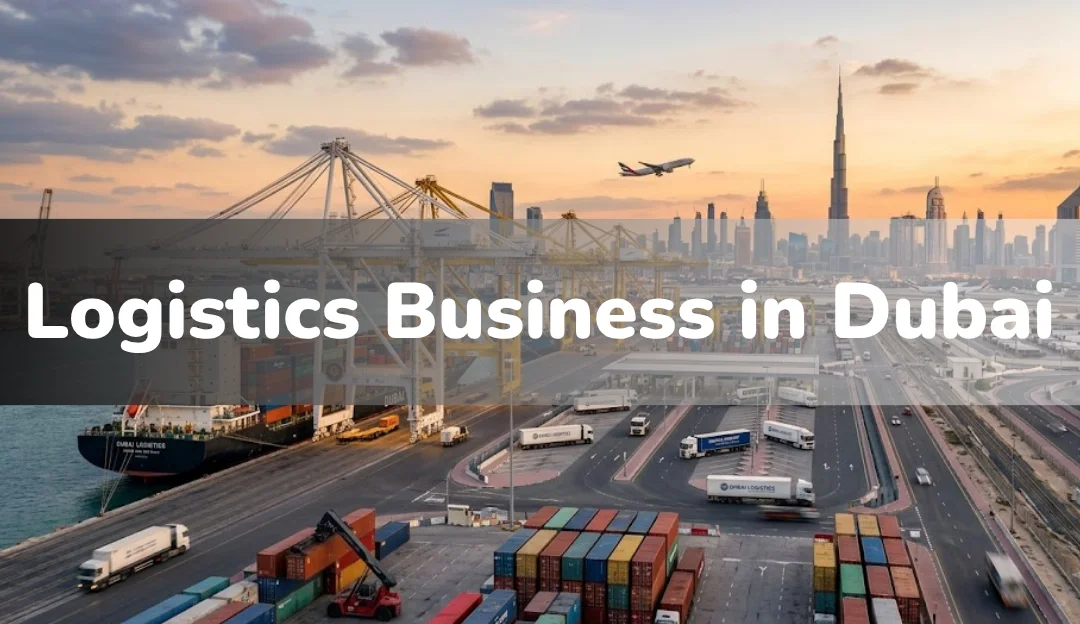
by Dubai moves more cargo before breakfast than most cities move in a week. If you have ever watched a container ship queue outside Jebel Ali Port or looked up at a cargo plane climbing out of DWC, you already understand why so many entrepreneurs want to start a logistics business in Dubai. But wanting in and actually building a compliant, profitable logistics company here are two very different journeys, and the gap between them is filled with licensing decisions, jurisdiction trade offs, and cost assumptions that most guides get only half right.
This guide pulls together the regulatory facts, the real world cost ranges, and the operator level advice that founders on the ground actually rely on, so you are not left guessing halfway through your application.
What Exactly Is a Logistics License in Dubai?
A logistics license in Dubai is the legal permit that authorizes a company to move, store, or manage goods, whether that means freight forwarding, warehousing, transportation, or distribution. Mainland logistics licenses are issued by the Department of Economy and Tourism (DET), formerly known as the DED, while free zone logistics licenses are issued by the relevant Free Zone Authority, such as JAFZA or DAFZA.
Without this license, you legally cannot handle customs documentation, operate commercial delivery vehicles, or lease bonded warehouse space in the emirate, regardless of how strong your client contracts already are.
Why Founders Keep Choosing Dubai for Logistics
Dubai’s pull for logistics entrepreneurs is not marketing fluff, it is baked into geography and policy.
- Strategic crossroads location: Dubai sits directly between Europe, Asia, and Africa, putting your operation within reach of over 3 billion consumers without a single ocean crossing.
- Round the clock cargo operations: Ports and airports here run 24/7, something most competing logistics hubs in Europe or South Asia simply cannot match.
- Low duty structure: Import duties often sit at 5% or less, and re-exported goods carry 0% customs duty, which matters enormously if your model depends on transshipment volume.
- Zero personal income tax and free zone corporate tax relief: Qualifying free zone entities can operate at 0% corporate tax, and there is no personal income tax anywhere in the UAE.
- 100% foreign ownership: Both free zones and most mainland activities now allow full foreign ownership, so you are not forced into a local partnership just to open your doors. (If logistics isn’t your only interest, our guide to starting a business in Dubai as a foreigner covers the broader ownership rules across sectors.)
The Six Business Models Worth Considering
Before you pick a jurisdiction or file a single form, decide what kind of logistics company you are actually building. Each activity type pulls in different regulators and different capital needs.
| Business Type | What It Actually Involves | Typical Regulator Involved |
|---|---|---|
| Freight Forwarding | Arranging air, sea, and land shipments plus customs paperwork on a client’s behalf | Dubai Customs, Civil Aviation, Maritime Authority |
| Warehousing & Bonded Storage | General, cold chain, or bonded storage for goods awaiting clearance | Free Zone Authority / DET |
| Transportation & Distribution | Owning or leasing trucks, vans, and fleets for road freight and last mile drops | RTA (Roads and Transport Authority) |
| Courier & Express Delivery | Same day and time sensitive parcel delivery, largely e-commerce driven | RTA, DET |
| 3PL & Supply Chain Management | Managing a client’s entire inventory, fulfillment, and reverse logistics flow | Free Zone Authority / DET |
| E-commerce Fulfilment | Pick, pack, and ship operations integrated with online storefronts | Free Zone Authority / DET |
Key Fact: Transportation services were the single largest revenue generating segment of the UAE logistics market in 2024, while warehousing and distribution are forecast to grow the fastest through 2030, largely on the back of e-commerce demand.
The LAUNCH Framework: A Structured Path to Setup
Instead of wading through fourteen loosely ordered steps, it helps to group the entire setup journey into six deliberate phases. Call it the LAUNCH Framework, and use it as your checklist from day one to opening day.
- L, Locate your jurisdiction. Decide between Mainland and a Free Zone before anything else, since this single choice determines who issues your license, what you can legally trade, and how much ownership flexibility you get.
- A, Activity definition. Pin down the exact logistics activity (freight forwarding, cold chain warehousing, last mile courier, etc.) because your activity code determines which secondary approvals you will need later.
- U, Unify your legal structure. Choose between an LLC (mainland), a Free Zone Establishment (single shareholder), or a Free Zone Company (multiple shareholders), based on how many founders and investors are involved.
- N, Name registration and licensing. Reserve a compliant trade name, get initial activity approval, then submit your MOA, passport copies, and address proof to obtain the trade license itself.
- C, Customs and compliance clearance. If you plan to import, export, or handle cross-border freight in any capacity, register with Dubai Customs for a Customs Code, and secure sector specific approvals from RTA, Civil Aviation, or Maritime Authority as relevant.
- H, Hire, house, and go live. Secure office or warehouse space, open a corporate bank account, register with MOHRE for staff visas, acquire vehicles or equipment, and launch client onboarding once your final approvals are in hand.
Mainland vs Free Zone: The Decision Matrix
Neither jurisdiction is universally “better,” it depends entirely on who you plan to serve.
| If Your Priority Is… | Then Choose… | Why |
|---|---|---|
| Delivering directly to UAE residents and local businesses | Mainland | Free zone licenses cannot serve the local UAE market directly without a mainland distributor partner |
| Winning government or public sector contracts | Mainland | Mainland companies are eligible for government tenders; most free zone entities are not |
| Running international transshipment or re-export operations | Free Zone (JAFZA, DAFZA, DLC) | 100% foreign ownership plus 0% corporate tax on qualifying income and no customs duty on re-exports |
| Minimizing setup cost and paperwork as a first time founder | Free Zone | Free zone packages are typically faster to set up and cheaper at entry level, especially zero visa quota packages |
| Operating commercial trucking fleets across all Emirates | Mainland | Full RTA registration and unrestricted road access across the UAE, not limited to one free zone’s boundary |
The Four Free Zones That Matter Most for Logistics
| Free Zone | Established | Standout Advantage |
|---|---|---|
| Jebel Ali Free Zone (JAFZA) | 1985 | Directly connected to Jebel Ali Port, hosts over 8,000 entities and contributes close to 24% of Dubai’s total FDI |
| Dubai Airport Free Zone (DAFZA) | Adjacent to DXB | Home to over 1,800 companies and 15,000+ professionals, ideal for express and pharmaceutical air cargo |
| Dubai South / Dubai Logistics City (DLC) | 2006 | Spans 145 sq km near Al Maktoum International Airport, built specifically for integrated air, sea, and road logistics |
| International Free Zone Authority (IFZA) | Modern entrant | Popular for lean, cost-efficient setups with flexible visa packages for smaller logistics startups |
These four are the standouts for logistics specifically, but Dubai has many more free zones worth comparing if your operation isn’t purely logistics-focused — see our roundup of 10 free zone areas in Dubai.
What a Logistics License Actually Costs (And Why the Numbers You See Online Conflict)
This is where most guides confuse readers, because two very different numbers get thrown around interchangeably: the license fee itself and the total capital needed to actually run the business.
License fee only:
| Setup Type | Starting Cost (AED) | Approximate USD |
|---|---|---|
| Free Zone License, zero visa quota | AED 11,900+ | ~USD 3,240+ |
| Mainland License, e-office setup | AED 25,500+ | ~USD 6,940+ |
| Higher tier licenses with cargo, transport, or trading categories | Up to AED 28,000 or more | ~USD 7,620+ |
If you only budget for the license fee, you will run out of runway within your first quarter. The license is the entry ticket, not the operating budget. For a full breakdown of what mainland setup actually costs beyond the license fee, see our Dubai mainland company setup cost guide.
Total operating capital needed (license plus infrastructure):
| Business Scale | Estimated 6 to 12 Month Investment |
|---|---|
| Lean, asset-light 3PL or freight brokerage (outsourced fleet, shared warehouse) | USD 150,000 to 500,000 |
| Medium setup with owned vehicles and a leased warehouse | USD 500,000 to 2 million |
| Capital intensive cold chain or dedicated fleet operation | USD 2 million and above |
If you only budget for the license fee, you will run out of runway within your first quarter. The license is the entry ticket, not the operating budget.
Additional costs that catch first time founders off guard include office or warehouse rent (billed separately from the license), visa and immigration fees per employee, government approvals for restricted activities, and Dubai Customs Code registration if you plan to import or export.
Documents You Will Actually Need
Keep this checklist ready before you start any application, since incomplete submissions are the single biggest cause of delay.
- Passport copies of all shareholders and the appointed manager
- Copies of shareholders’ visit or residence visas
- CV of the company manager
- Proof of trade name reservation
- Initial activity approval from DET or the relevant Free Zone Authority
- Signed legal agreement for office or warehouse address in the UAE
- Attested Memorandum of Association (MOA) and Articles of Association where applicable
- Proof of payment for the trade license
What Nobody Tells You: Cost Optimization Realities From the Ground
Anyone who has actually operated in this market will tell you the same thing: Dubai’s logistics sector is saturated, and a handful of players compete purely on rock-bottom pricing that barely covers their own operating costs. If you walk in trying to match those prices from day one, you will bleed cash before your second client renewal.
Here is what tends to actually work for new entrants:
- Do not buy your own fleet on day one. Partner with an established vendor or subcontractor for transport in your first six to twelve months. This single decision removes the largest upfront capital spike most new logistics founders face.
- Pick one high demand micro-niche and dominate it locally before expanding geographically. Trying to serve every corridor and every client type at once spreads your limited resources too thin to build a reputation anywhere.
- Grow deliberately, not explosively. Sustainable client retention and strong customer service consistently outperform undercutting competitors on price, because price wars in this market have no real floor.
- Understand that capital intensity is structural, not optional. Vehicle wear and tear accelerates due to heat and sand exposure, and labor costs have climbed due to regulatory category shifts for logistics staff classifications. Build these realities into your unit economics from the start, not after your first maintenance bill.
Staffing, Vehicles, and Final Approvals
Once your license and premises are locked in, three operational pieces remain before you can legally go live.
- Staffing and labour registration: Register with the Ministry of Human Resources and Emiratisation (MOHRE), apply for an establishment card through GDRFA, and process Emirates IDs and work visas for every hire, from drivers to customs clearance specialists.
- Fleet and equipment acquisition: If transportation is part of your model, purchase or lease vehicles, register them commercially with RTA, confirm your drivers hold valid RTA commercial licenses, and install GPS or fleet management tools from day one rather than retrofitting later.
- Final regulatory sign-off: Before your first shipment moves, confirm you hold your final logistics license, RTA approval if transport is involved, an active Dubai Customs Code, and any Aviation or Maritime Authority clearance your specific cargo type requires.
Frequently Asked Questions
Choose between a mainland or free zone jurisdiction, define your exact logistics activity, apply for the license through DET or a Free Zone Authority, secure office or warehouse space, register with Dubai Customs if you handle imports or exports, and complete visa and banking setup before launching operations.
JAFZA suits sea freight and bulk cargo operations, DAFZA is strongest for air cargo and pharmaceutical shipments, and Dubai South (DLC) works well for integrated multimodal operations near Al Maktoum International Airport.
Free zone logistics licenses with zero visa quota typically start around AED 11,900, while mainland e-office licenses start around AED 25,500. Total operating capital for a functioning business, including warehousing and vehicles, typically runs from USD 150,000 for a lean setup to well over USD 2 million for a capital-intensive cold chain or fleet-heavy operation.
Yes. Beyond your core trade license, you will likely need RTA approval for commercial vehicles, a Dubai Customs Code for import or export activity, and sector specific clearance from Civil Aviation or Maritime Authority if your cargo moves by air or sea.
The market is genuinely competitive and price-sensitive at the lower end, but the underlying demand curve, driven by e-commerce growth and Dubai’s re-export volume, continues to outpace supply in specialized segments like cold chain and 3PL fulfilment, which remain comparatively underserved.
The Bottom Line
Starting a logistics business in Dubai rewards founders who treat the jurisdiction decision, the licensing activity, and the cost structure as one connected system rather than three separate checkboxes. Get your LAUNCH sequence right, budget for the real operating capital rather than just the license fee, and resist the urge to compete on price alone, and you are positioned to build inside one of the fastest compounding logistics markets on the planet.
For more on launching other kinds of business in Dubai, explore our full setup library.
Disclaimer: Costs and regulatory details mentioned above are indicative and subject to change based on UAE government policy updates. Always confirm current fees and requirements directly with DET or your chosen Free Zone Authority before filing.