 by
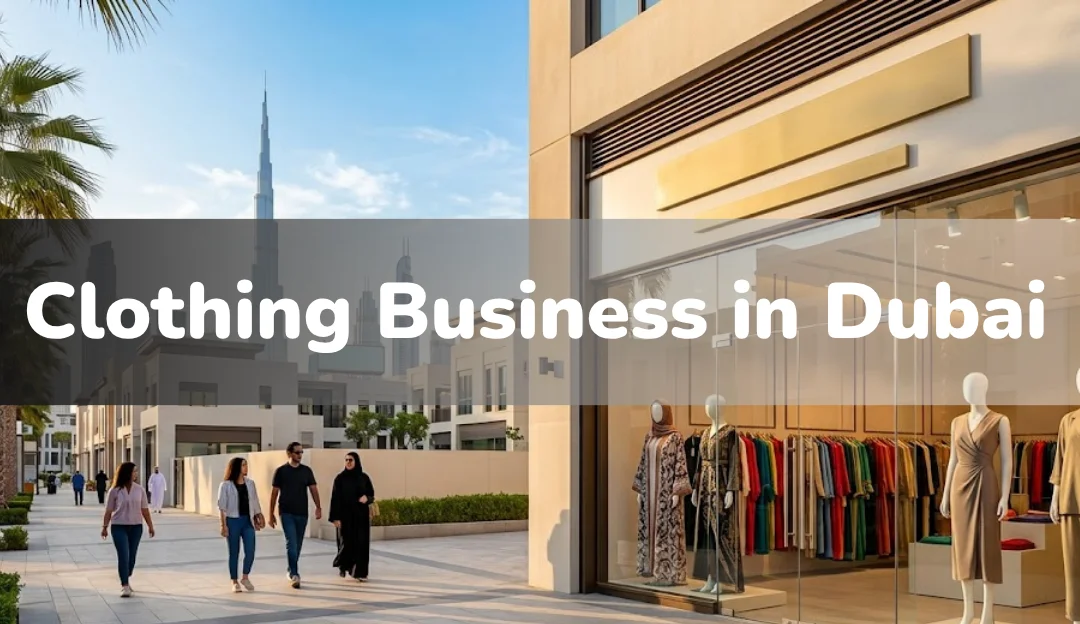
by Dubai does not just sell clothes, it sells the idea of looking good while doing it. Between the malls, the souks, the influencers, and the tourists with disposable income to spare, the city has quietly become one of the easiest places on earth to launch a fashion label and one of the hardest places to do it badly. If you are seriously considering starting a clothing business in Dubai, the opportunity is real, but so is the paperwork, and getting the sequence wrong is the single biggest reason new brands stall in their first year.
This guide strips away the generic “register your company” advice you have probably already read and replaces it with the actual decision points and the actual order of operations that determine whether your Dubai clothing brand launches smoothly or gets stuck in avoidable delays.
The STITCH Framework: A Practical Launch Sequence
Most guides hand you a flat list of steps. That works fine for a checklist but poorly for sequencing, because in Dubai, doing one step before another can cost you weeks. Below is a sequence organized into a memorable framework built specifically for apparel founders, since it doubles as a nod to the industry itself.
| Letter | Stage | What Actually Happens Here |
|---|---|---|
| S | Select Your Structure | Decide mainland versus free zone and pick your business model (retail, online, wholesale, manufacturing) |
| T | Trade Name Registration | Reserve a unique brand name that passes local naming rules |
| I | Initial Approvals and Licensing | Define your activity code and secure the commercial or e-commerce license |
| T | Tenancy, Customs and Compliance | Lease and Ejari registration, Customs Client Code, civil defense and municipality clearances |
| C | Capital Setup: Banking and Visas | Open a corporate account, process investor and staff visas |
| H | Hit the Market | Launch your website, socials, and any physical presence |
S: Select Your Structure
This single decision shapes almost everything downstream, including your rent, your ownership rights, and even which government office you will be dealing with going forward.
| Factor | Mainland (DED / DET) | Free Zone (IFZA, D3, EZDubai, Meydan, DMCC) |
|---|---|---|
| Best suited for | Physical boutiques, mall kiosks, storefronts | E-commerce, dropshipping, wholesale export |
| Market access | Unrestricted, sell anywhere in the country | Local trading generally needs a distributor or mainland branch |
| Foreign ownership | 100% for most commercial retail activities | 100% |
| Physical space | Mandatory leased premises with an Ejari contract | Flexi-desk options exist, lowering fixed overhead |
| Setup speed | Slightly longer due to location approvals | Often faster, some platforms process licenses digitally |
If your customer is a tourist walking past a shopfront in a mall, then mainland is the only sensible route. If your customer finds you through Instagram or TikTok and checks out from their phone, then a free zone e-commerce license will almost always be simpler and faster to set up.
Designer focused brands often gravitate toward Dubai Design District (d3) for its creative community and showroom culture, while budget conscious founders lean toward Meydan Free Zone for its lower entry barrier. If you are not a UAE national and want the full ownership and visa picture before committing to either route, our guide on starting a business in Dubai as a foreigner walks through what changes for expat founders specifically.
There is also a free zone worth knowing about if fabric sourcing is central to your business: Dubai Textile Village is being developed specifically around the textile trade, and it sits alongside other options in our roundup of free zone areas in Dubai if you want to compare it against DMCC, D3, or Meydan before you decide.
T: Trade Name Registration
Your trade name has to be genuinely unique, free of special characters, and it cannot echo an existing registered company. It also cannot carry any blasphemous, political, or offensive connotation, a rule that trips up more international founders than you would expect when a name that is harmless in one language carries a different meaning in Arabic. One detail people miss: a reserved trade name in Dubai is only valid for six months, so if your licensing process stalls, you will need to renew the reservation before it lapses.
I: Initial Approvals and Licensing
You will need to declare a specific activity code, phrases like “Ready-made Garments Trading,” “Textile Trading,” or “E-commerce” rather than a vague description of “fashion.” Getting the activity code wrong at this stage is one of the quieter reasons license applications get bounced back for resubmission.
T: Tenancy, Customs and Compliance
If you are opening a physical space, this is where you register your lease through Ejari, the UAE’s official tenancy registration system, and where retail founders often underestimate timelines. Landlords in Dubai commonly ask for the full year’s rent upfront in post dated cheques, so plan your cash flow around that before you sign anything.
If you plan to import fabric or finished garments, and most clothing businesses in Dubai do, you will also need a Customs Client Code from Dubai Customs. Skipping this step is one of the most common reasons a founder’s first shipment sits stuck at the port.
C: Capital Setup, Banking and Visas
Corporate bank accounts typically require your trade license, your Ejari or flexi-desk agreement, a business plan, and shareholder identification. Investor and staff visas run roughly AED 3,800 to 5,500 per person, and this is a cost founders frequently forget to build into their first year budget, so start this process well before you expect to need staff on the ground.
H: Hit the Market
Only now does marketing genuinely make sense, since launching a beautiful Instagram page before your license and banking are sorted just creates demand you legally cannot fulfill yet.
What It Actually Costs to Set Up
Setup costs vary a lot depending on whether you go online first or open a physical space. Here is a realistic budget range to plan against, drawn from typical free zone fees, mainland licensing costs, and retail leasing patterns in the city.
| Business Model | Realistic Setup Range (AED) |
|---|---|
| E-commerce / online brand (free zone license, flexi-desk) | 30,000 to 100,000 |
| Physical retail boutique (lease, fit out, inventory) | 150,000 to 450,000+ |
| Small standalone clothing store | 50,000 to 150,000 |
Line Item Breakdown
- E-commerce license (free zone): AED 5,500 to 15,000
- Mainland commercial license: AED 15,000 to 25,000
- Investor or staff visa (each): AED 3,800 to 5,500
- Annual retail lease: AED 50,000 to 200,000+ (often paid via upfront post dated cheques)
- Initial inventory: AED 10,000 to 100,000+, depending on category and volume
Why this matters: the online model typically costs a fraction of the physical retail model to launch. If your capital is limited, starting online first and validating your collection before signing a mall lease is the financially safer sequence.
Taxes and Ongoing Charges You Need to Plan For
| Charge | Rate | When It Applies |
|---|---|---|
| Corporate Tax | 0% | On income up to AED 375,000 |
| Corporate Tax | 9% | On income above AED 375,000 |
| VAT | 5% | Applied to most goods and services, mandatory registration once taxable supplies cross AED 375,000 per year |
These figures have applied since June 2023 and are worth confirming directly on the Federal Tax Authority’s website (www.tax.gov.ae) before you file, since compliance rules are occasionally updated.
The ranges above cover a clothing specific setup, but if you want the full breakdown of government fees, office costs, and visa charges that go into a mainland company more broadly, our detailed Dubai mainland company formation cost guide is worth reading before you sign with an agent.
Your license also is not a one time cost. It needs to be renewed every year, and missing that window can freeze your bank account and staff visas even before any fine kicks in, so it is worth reading through how to renew a trade license in Dubai well before your first renewal comes due.
Choosing Where to Actually Sell
Jurisdiction tells you how you are licensed. Location tells you whether anyone will actually buy from you. These are two separate decisions, and conflating them is a common early mistake.
| Location Type | Examples | Ideal Customer |
|---|---|---|
| Flagship / luxury mall | The Dubai Mall, Mall of the Emirates | Tourists, luxury shoppers, brand building |
| Regional mid tier mall | City Centre Deira, City Centre Mirdif, Ibn Battuta | Mid market apparel, family shoppers, high turnover |
| Residential lifestyle hubs | Dubai Marina Mall, JLT | Athleisure, lifestyle brands, resident expats |
| Discount / clearance | Dubai Outlet Mall, Outlet Village | Bargain hunters, factory outlet strategy |
| Boutique neighborhood streets | Jumeirah, Al Wasl Road | Designer labels, niche premium footwear |
| Wholesale and sourcing | Deira, Karama, Meena Bazaar, Naif Market | Bulk buyers, ethnic wear, budget footwear |
| Pop up and testing | BoxPark, City Walk, Global Village | New collections, market validation before a permanent lease |
A practical decision path many founders skip: start with a pop up or e-commerce presence to validate demand, then scale into a permanent lease once you know which product actually sells, rather than signing a multi year mall lease on a hunch.
Choosing Your Niche and Positioning
Fast fashion in Dubai is genuinely saturated, competing head on against established retailers is a tough game for a new entrant. A few categories consistently offer more room to grow into:
- Modest fashion and abayas: steady, non seasonal demand rooted in local culture
- Kidswear: a growing niche among the city’s large expatriate family population
- Sustainable and eco friendly apparel: rising demand as consumers become more environmentally conscious, with materials like Tencel or organic cotton helping brands stand out
Rather than trying to out market established fast fashion players, a well positioned brand in one of these niches can build a loyal audience faster and with less direct competition.
Sourcing Your Materials
| Sourcing Route | Advantage | Trade Off |
|---|---|---|
| Local UAE suppliers | Faster delivery, lower shipping cost, supports local supply chain | Fewer specialty or unique fabric options |
| International suppliers (Turkey, India, China, Vietnam) | Wider fabric variety, often better pricing at volume | Longer lead times, added shipping and customs steps |
Most established Dubai garment traders run a hybrid model, sourcing base fabrics internationally through major ports and trading hubs, while keeping smaller specialty or rush orders local. Whichever route you choose, always request and physically inspect a sample before committing to a bulk order, this single habit prevents the majority of quality disputes that new importers run into.
Marketing That Actually Converts in This Market
| Channel | Primary Role |
|---|---|
| Visual storytelling, product discovery, direct shopping tags | |
| TikTok | Short form styling content, reaching younger and expat audiences |
| Influencer partnerships | Credibility transfer, especially for modest wear and activewear niches |
| SEO and a proper online store | Long term discovery, essential even if you also run a physical shop |
| Fashion events (Dubai Fashion Week, pop ups) | Brand visibility and press, less about direct sales |
A clothing brand launching in Dubai without an e-commerce presence, even a simple one, is leaving business on the table, since so much of local shopping behavior has shifted online.
Documents You Will Be Asked For, Every Time
- Trade name reservation certificate
- Memorandum of Association and Articles of Association
- A concise business plan summary
- Proof of leased office, retail space, or flexi-desk agreement
- No Objection Certificate where applicable
- Import and export license documentation, if you plan to bring in fabric or finished garments
Frequently Asked Questions
How much does it cost to open a clothing store in Dubai? A small standalone clothing store typically costs between AED 50,000 and 150,000 to open, covering the license, rent, initial inventory, and basic staffing. Larger mall based boutiques with premium fit outs can run considerably higher.
What is the corporate tax rate for a clothing business in Dubai? Profits up to AED 375,000 are taxed at 0%. Anything above that threshold is taxed at a flat 9%, a policy that has applied since June 2023. A 5% VAT also applies to most sales once your taxable turnover crosses AED 375,000 a year.
Do I need a license to sell clothes online in Dubai? Yes. You must register your business with the Department of Economic Development or a relevant free zone authority and obtain a specific e-commerce license before legally selling apparel online in the UAE.
Is mainland or free zone better for a clothing business in Dubai? It depends entirely on your sales channel. Mainland licensing suits physical stores selling directly to local walk in customers across the UAE. Free zone licensing suits online brands, wholesale exporters, and businesses that do not need a mall or street front presence.
Do I need a physical office to start a clothing brand in Dubai? Not necessarily. Many free zones offer flexi-desk options that satisfy licensing requirements without a full retail lease, which works well for e-commerce and wholesale models.
Which clothing niches have the most room for new entrants in Dubai? Modest fashion and abayas, resortwear, premium activewear, kidswear, and sustainable apparel currently show strong unmet demand, largely because fast fashion competition is already saturated.
Should I start with a physical store or e-commerce first? Starting online first, or testing through a pop up, lets you validate your collection with lower commitment before signing a long term retail lease, which is generally the safer sequence for new founders.
The Bottom Line
Starting a clothing business in Dubai rewards founders who sequence their decisions correctly far more than it rewards founders with the biggest opening budget. Pick your jurisdiction based on how you actually plan to sell, not on which option sounds more prestigious. Validate your product through e-commerce or a pop up before committing to an expensive mall lease. And position yourself in one of the categories where demand is genuinely underserved, rather than competing directly with fast fashion giants who already own that shelf space. Get that sequence right, and the rest of the process becomes far more manageable.
For more practical guides like this one, on formation costs, licensing, and everything else involved in running a company here, explore our full library of business in Dubai articles.